Why Allulose Got Popular — and Why Monk Fruit May Be the Smarter Choice
Every few years, a new sweetener captures the internet’s attention. Right now, that sweetener is allulose. Its sugar-like taste and versatility have made it increasingly popular in reduced-sugar products. So why has allulose become so popular — and how does it compare with monk fruit?
Why Allulose Caught On
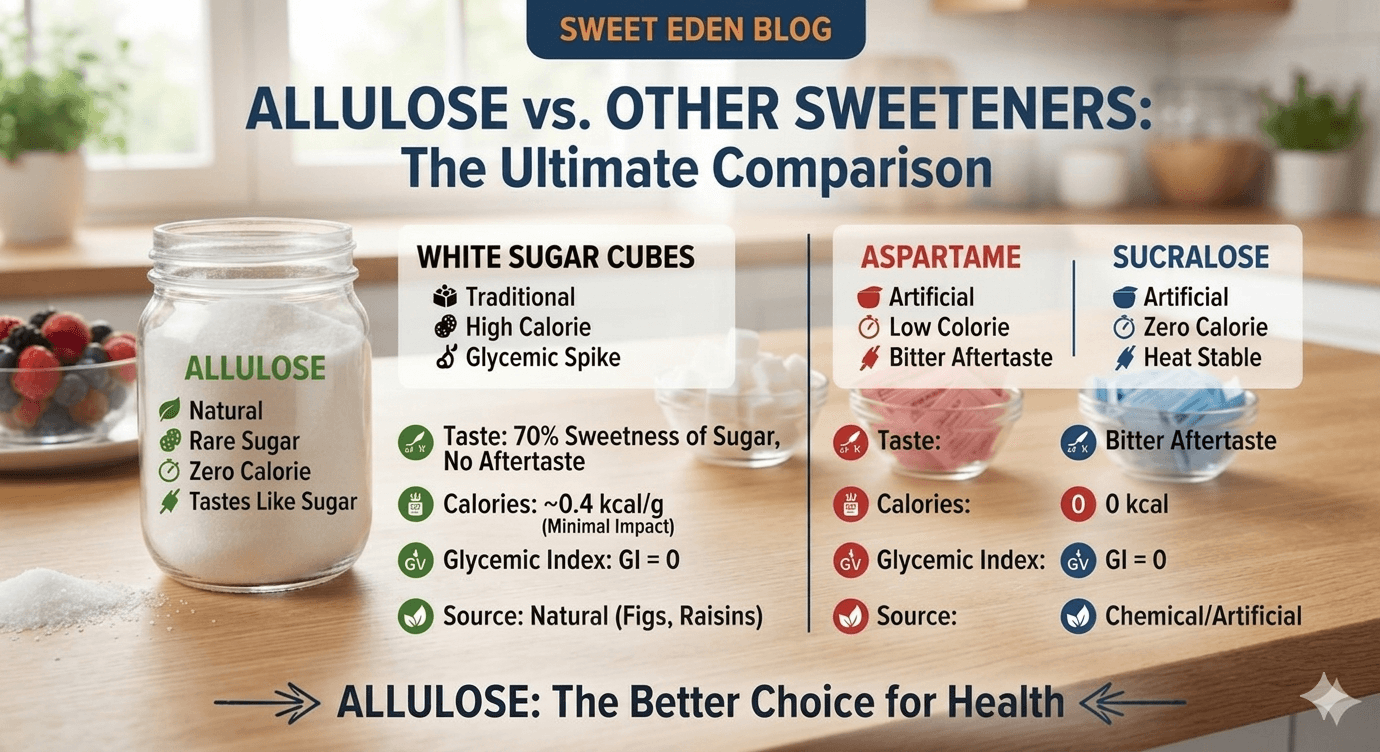
- It tastes similar to sugar. Allulose has a taste profile that is closer to regular sugar than many high-intensity sweeteners, making it appealing for everyday use.
- It works well in baking. Allulose can provide bulk and can brown and caramelize during cooking, making it particularly useful for baked goods and desserts.
- It is very low in calories. Allulose provides significantly fewer calories than regular sugar and has a minimal effect on blood glucose.
The Catch With Allulose
Allulose has several advantages, but it may not be the perfect choice for everyone. A few factors can make it less practical for everyday use:
- Availability and cost. Allulose can be harder to find and may cost more than commonly available sweeteners, particularly in markets where it is less widely sold.
Where Monk Fruit Fits
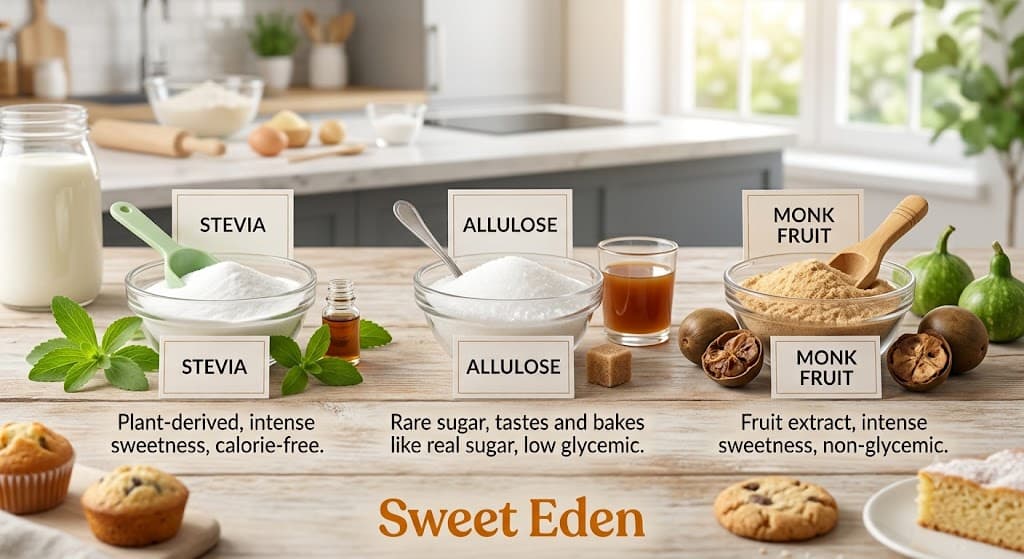
Monk fruit, also known as Luo Han Guo, is a fruit traditionally associated with China. Its sweetness comes from naturally occurring compounds called mogrosides.
- Highly concentrated sweetness. Monk fruit extract is intensely sweet, so only a small amount is needed.
- Fruit-derived. Monk fruit extract comes from the monk fruit itself.
- Works well with allulose. Because monk fruit provides intense sweetness while allulose provides bulk and functionality, the two ingredients can complement each other in a sweetener blend.
Why the Combination Matters
Allulose and monk fruit don't necessarily have to compete. In fact, they can work well together.
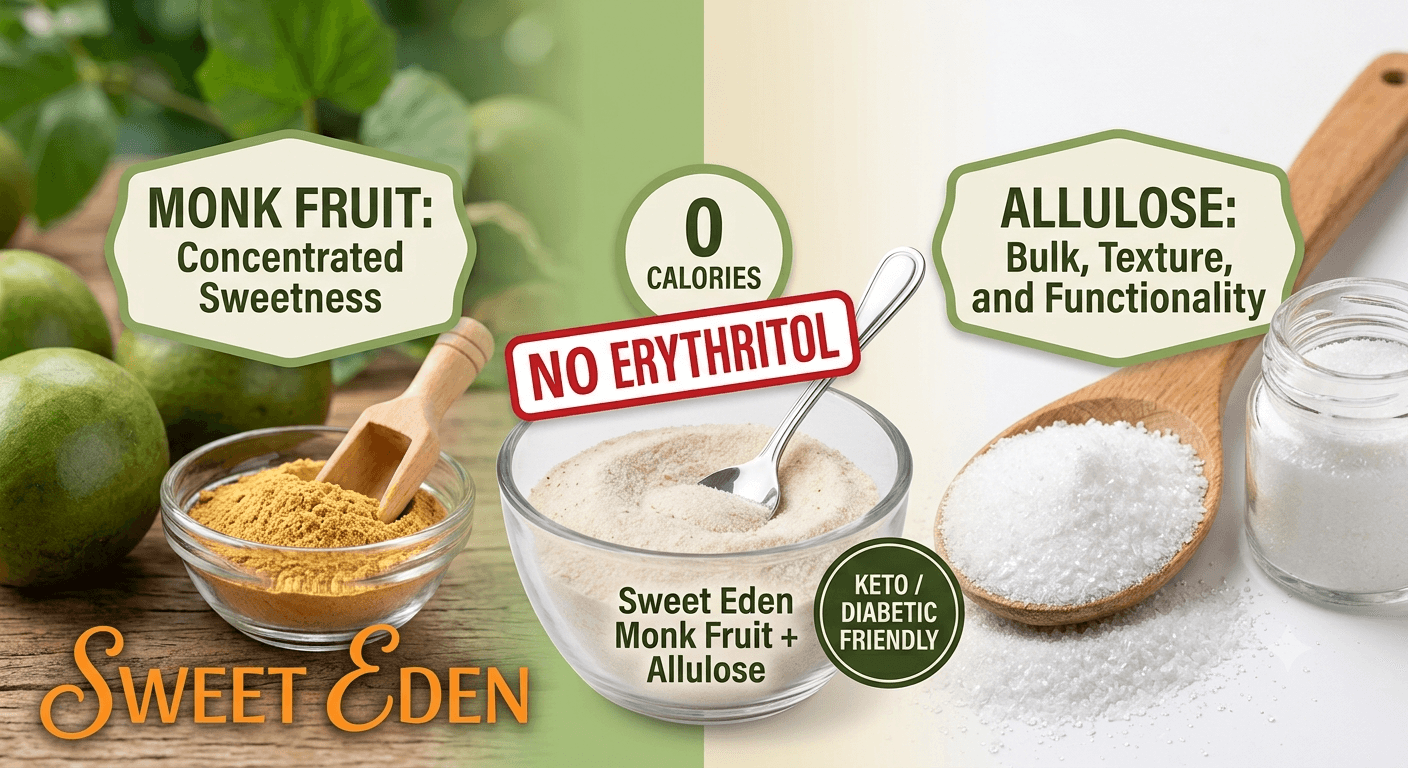
Allulose provides bulk, texture, and sugar-like functionality, while monk fruit provides concentrated sweetness. Combining them can create a sweetener that is easier to use in everyday drinks, cooking, and baking.
Another important consideration is the rest of the ingredient list. Some monk fruit products use erythritol as a bulking ingredient. Erythritol can provide bulk, but some people notice a cooling sensation or digestive discomfort when consuming sugar alcohols.
Sweet Eden takes a different approach by combining monk fruit with allulose and avoiding erythritol.
Why Sweet Eden Uses Monk Fruit + Allulose
We believe the two ingredients complement each other. Monk fruit brings concentrated sweetness, while allulose helps provide the bulk and sugar-like functionality needed for everyday use.
The result is an erythritol-free monk fruit and allulose blend designed for everything from tea and coffee to cooking and baking.
If you like the sugar-like qualities of allulose and the concentrated sweetness of monk fruit, you don't necessarily have to choose between them. A well-formulated monk fruit and allulose blend can bring the strengths of both ingredients together.
Sweeten with confidence. Sweet Eden combines monk fruit with allulose and contains no erythritol. Available as a 1:1 powder and ultra-concentrated liquid drops.
Ready to sweeten the clean way?
Sweet Eden monk fruit sweetener — zero calorie, zero glycemic, and made with no erythritol.
Try Sweet Eden monk fruit sweetener →